
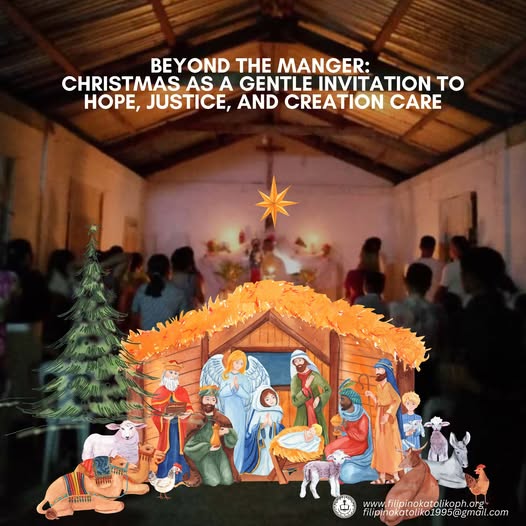
Beyond the Manger: Christmas as a Gentle Invitation to Hope, Justice, and Creation Care
For many, Christmas is a beloved tapestry of twinkling lights, shared traditions, and joyful giving. Yet, woven into the familiar warmth of this season is a narrative of profound theological significance—a gentle yet firm declaration of divine principles that carries enduring socio-political, economic, and ecological weight. The Christmas story, rightly understood, is a quiet yet compelling call for hope, justice, and holistic transformation, binding together the well-being of humanity and the Earth.
The Theological Imperative in Economic and Ecological Reality
The birth of Christ is an event inextricably linked to the material world and its power structures. As we delve into the Nativity narrative, we find that the setting itself speaks volumes about a deep theological truth embedded within a stark economic reality. The nativity occurred not in a palace, but against the backdrop of an imposed census by the Roman Emperor, Caesar Augustus. This historical context reveals three critical dimensions of the Christmas imperative:
Solidarity with the Marginalized: The census served as an instrument of taxation and state control. By entering the world through a family displaced and stressed by imperial decree—a family that “went to their own towns to be registered” (Luke 2:1, 3) only to find no room—the divine presence signals an immediate solidarity with the poor and the economically burdened. The story teaches that the sacred is found not in centers of wealth, but at the periphery, upholding the principle of God’s preferential option for the poor (James 2:5).
A Call to Stewardship: Furthermore, the very first dwelling of the Holy Family was a stable, amongst livestock and straw. This humble setting immediately grounds the sacred event in the material world and with the creatures who inhabit it. It serves as a gentle reminder of the ancient mandate that humanity was placed “in the Garden of Eden to till it and keep it” (Genesis 2:15)—that humanity is not the owner of the world, but the caretaker of God’s creation. This resonates with the Lakota principle of Mitakuye Oyasin (“All are related”), which acknowledges kinship with all living things, including the Earth.
A Contrast in Kingship: Finally, the Christmas message presents a radical challenge to worldly authority. While Roman citizens proclaimed the Emperor as “Lord,” the angels announced a different “Savior, who is Christ the Lord” (Luke 2:11). This sets a contrast between earthly dominion—which often leads to extraction and depletion—and divine kingship—rooted in self-giving and service to all of creation, reflecting the teaching that the Son of Man came “not to be served but to serve” (Mark 10:45).
A Foundational Hope for Re-Ordering the World
Flowing from the theological reality of the Incarnation is the emergence of foundational hope. The setting—a stable, amidst common shepherds—is the ultimate symbol of Hope. It is a quiet assurance that new beginnings can emerge from the most humble circumstances.
This hope is not passive waiting; it is the firm spiritual conviction that the established norms of injustice—both human and environmental—are not final. It asserts that divine power is made manifest not through force, but through love and ecological harmony. This is the “assurance of things hoped for, the conviction of things not seen” (Hebrews 11:1) that inspires an active, faith-driven hope to work toward the world as it ought to be—a world where people “shall all sit under their own vines and under their own fig trees, and no one shall make them afraid” (Micah 4:4), a vision of peaceful, sustainable living. This spiritual drive also aligns with the Islamic call for Islah (reform or setting things right).
The Ethical Call for Systemic and Eco-Justice
The themes of divine solidarity and active hope transition naturally into an imperative for action. The essence of the Christmas story carries a mandate for Justice, which must now be understood to include the planet itself.
Honoring the Invisible: The journey toward justice begins with who is seen and prioritized. The shepherds, who were “living out in the fields, keeping watch over their flock by night” (Luke 2:8), were the forgotten of their society and the first to receive the divine announcement. This prioritization establishes an ethical imperative for us to elevate the dignity of the economically invisible, embodying the promise that God “has lifted up the lowly” (Luke 1:52). This ethic compels us to recognize the intrinsic value of the natural world, which is also often exploited for profit, a view supported by the Buddhist/Hindu principle of Ahimsa (non-violence) toward all life forms.
The Link to Eco-Justice: Crucially, this ethical focus links human well-being to the Earth’s health. The exploitation of the poor is frequently linked to the exploitation of the land—a theme often found in the Prophets, where injustice causes the land to “mourn” and “dry up” (Hosea 4:3). Celebrating Christmas compels us toward systemic justice and eco-justice—the hard work of restructuring communities so that life, dignity, and a healthy environment are available to all, ensuring that our consumption does not destroy the common home we share.
Transformation as Self-Giving Love and Creation Care
Ultimately, the themes of justice and hope converge in the call for profound Transformation, inviting us to re-center our lives and values around divine love and responsible living.
Redefining Wealth: The narrative transforms our perspective on wealth, suggesting that true abundance is not found in accumulation—we are warned, “Do not store up for yourselves treasures on earth” (Matthew 6:19)—but in offering and sacrifice. The act of the Magi offering their gifts of gold, frankincense, and myrrh (Matthew 2:11) symbolizes that wealth’s highest purpose is to serve the sacred, calling for a transformation away from consumerism toward sustainability.
The Power of Self-Emptying: The most powerful call to transformation comes from the event itself. The Incarnation, the divine taking on human form, is the ultimate act of self-emptying (kenosis). This graceful act of service is described: “Christ Jesus, who… emptied himself, taking the form of a slave” (Philippians 2:5-7). It fundamentally shifts the definition of power from dominance to service, encompassing both the human and natural world. This is the profound personal transformation invited by the season—to live for the greater good, respecting the integrity of creation, aligning with the Jewish concept of Tikkun Olam (“repairing the world”).
Conclusion: Embracing the Gentle Revolution for All Creation
In summary, the Christmas message is far more than a comforting story. To embrace Christmas fully is to accept this gentle yet revolutionary invitation. It is to choose active hope over resignation, systemic and ecological justice over convenient apathy, and profound transformation toward sustainability over stagnation.
May this Holy Season, brings us all to reflective celebration, look beyond the manger, and welcome the quiet, powerful truth lying there: that a world built on love, hope, justice, and enduring care for creation is a possibility we are called to bring into being.
As Filipino Katoliko, let us continue performing, spreading, preaching and teaching the true doctrines of Jesus Christ for the Salvation of humankind and care for the creation, embracing biblical and theological foundation, Serving and Loving God and Country through Bible and Science (Matthew 28:19).
We pray for the guidance of the angels and Saints of the Lord and the Mother Mary.
In the name of the Father, the Son and the Holy Spirit. Amen. Alleluia.