
Brethren, join us in this prayer for accountability, integrity, and justice.
The Filipino Katoliko, an independent Filipino Catholic denomination and a member of the Christian Catholic community in the Philippines, proclaims with unwavering conviction that corruption, impunity, and the abuse of power have no place in a society built on the Gospel’s call to love, truth, and justice. Our faith obliges us not only to speak out against these evils but also to act concretely in service to the poor, the powerless, and the whole of God’s creation.
Our convictions are rooted in the Holy Scriptures, which give us both moral direction and practical guidance. Let the following verses in the Holy Bible be the roots that shape our moral vision:
“Better is a poor person who walks in his integrity than a rich man who is crooked in his ways.” (Proverbs 28:6) – True worth lies in upright conduct, not in material accumulation.
“The Lord loves righteousness and hates injustice; the upright shall be his favorite.” (Psalm 11:7) – God’s heart is aligned with justice; corruption is antithetical to His nature.
“Moreover, it is required of stewards that they be found trustworthy.” (1 Corinthians 4:2) – Those entrusted with public resources must be reliable and honest.
“Whoever multiplies his wealth by interest and profit gathers it for the one who is generous to the poor.” (Proverbs 28:8) – Wealth obtained through exploitation ultimately belongs to those who practice charity.
“For the love of money is a root of all kinds of evils.” (1 Timothy 6:10) – Greed fuels the corrupt practices we condemn.
“To act justly and to love mercy and to walk humbly with your God.” (Micah 6:8) – This triple command encapsulates the Christian response to societal wrongs.
“The earth is the Lord’s, and everything in it, the world, and all who live in it.” (Psalm 24:1) – All of creation is sacred; its exploitation is a grave sin.
“You are the light of the world… a city set on a hill cannot be hidden.” (Matthew 5:14) – Our witness must illuminate truth and expose darkness.
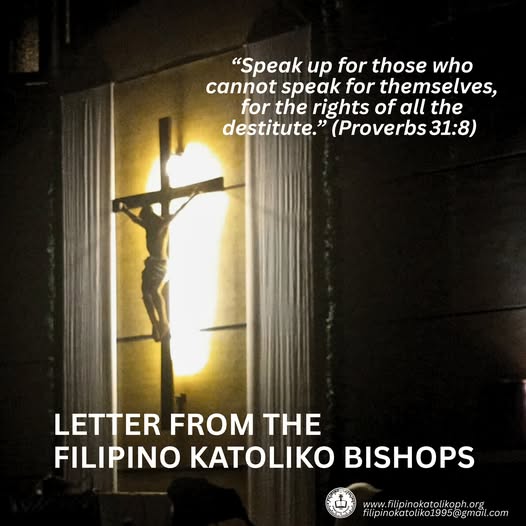
“Speak up for those who cannot speak for themselves, for the rights of all the destitute.” (Proverbs 31:8) – We are called to defend the marginalized.
“If the government requires you to do something contrary to God’s law, you must obey God rather than men.” (Acts 5:29) – When civil authority becomes tyrannical, fidelity to God’s law takes precedence..
Having grounded ourselves in Scripture, we are called to commit take actions.
We are called to commit to a comprehensive, faith driven agenda that begins with serving the poor and powerless: let us champion policies guaranteeing food, shelter, health care and education for the most vulnerable, push for fair wages, affordable housing and universal public services, and promote charitable redistribution of national wealth in line with Proverbs 28:8. Recognizing the earth as God’s gift (Psalm 24:1), let us stand against environmental exploitation by supporting legislation against illegal logging, mining and pollution, and by advancing democratic renewable energy transition and local economy development that lessen reliance on extractive industries. Development, therefore, must be both ecological and culturally sensitive; let us integrate traditional ecological knowledge into land use planning, empower indigenous leadership, and promote agro ecology, community based tourism and sustainable fisheries that protect biodiversity while providing livelihoods.
When civil authority becomes oppressive, our faith must stand with the oppressed, publicly denounce violations of human dignity, create safe spaces for whistle blowers and victims, and organize peaceful, prayerful criticisms rooted in the Gospel’s call to be “the salt of the earth.” And to eradicate impunity that perpetuates abuse of power, let us support transparent, independent investigations of corruption and human rights abuses, ensure fair trials that respect due process, and implement restorative justice programs that heal victims and communities. Transparency and accountability shall be reinforced through mandatory disclosure of public contracts and budgets, real time expenditure dashboards, and substantial whistle blower protections with anti retaliation statutes.
Guided by Micah 6:8, let us foster a culture where legal systems prioritize restorative outcomes, social services extend compassion to those trapped in poverty or addiction, and leaders model humility and seek counsel from the faithful.
Finally, as Christians, let us live as the light of the world (Matthew 5:14) by speaking truth to power, providing concrete solutions, aids such as food drives, legal clinics and environmental clean ups, and using digital platforms responsibly to share accurate information and counter misinformation.
We invite every Filipino—regardless of creed, ethnicity, or political affiliation—to join us in this mission. Corruption, greed, tyranny, and environmental degradation are not merely political issues; they are spiritual crises that demand a collective, faith infused response.
May the Holy Spirit grant us the courage to confront injustice, the wisdom to steward creation responsibly, and the compassion to uplift the marginalized.
Together, regardless of creed or background, to join a collective, faith based effort to build a nation marked by integrity, justice, stewardship of creation and compassionate solidarity, the vulnerable are protected, and the beauty of God’s creation flourishes for generations to come.
In the name of the Father, the Son, and the Holy Spirit.
FILIPINO KATOLIKO Bishops
December 5, 2025
#filipnokatolikoph #creationintegrty