
SIBAGAT, Agusan del Sur — Charting a unified course for institutional growth and grassroots renewal, the top leadership of the Filipino Katoliko church officially convened from June 16 to 17, 2026, for its crucial Mid-Year Conference.
Hosted by the Saint Anthony de Padua – Sibagat Parish, the two-day assembly brought together the College of Bishops, clergy, and religious sisters from across the region to evaluate the church’s missionary impact, tighten administrative systems, and map out its pastoral trajectory for the remainder of the year and beyond.
Aligning the Mission: Mandates, Strategy, and Welfare
The gathering commenced on a deeply spiritual note with a Holy Mass officiated by Rev. Fr. William Requiso, setting a tone of collaborative devotion for the intense administrative and pastoral reviews that followed.
The plenary sessions focused on reexamining the Church’s mandate to ensure all current ministries remain closely aligned with the core identity and spiritual calling of the Filipino Katoliko faith. With the mandate firmly grounded, the leadership reviewed the church’s five-year Strategic Plan, made key adjustments, and sharpened priorities to better meet the evolving needs of the faithful in a changing world.
Recognizing that spiritual missions require healthy institutional structures, the leadership also dedicated significant time to modernizing its financial systems and management policies for greater transparency. Beyond the Finance Ministry, the assembly held critical discussions focusing on the Social Action Ministry, highlighting the church’s renewed commitment to community outreach, poverty alleviation, and social justice.
Closely tied to these upgrades were thorough discussions and a comprehensive review of the FK Pension and Welfare Program for Church Servants. This priority initiative focuses on securing stable retirement, healthcare, and welfare solutions for the dedicated individuals who spend their lives serving the community.
Decentralized Consultations and July Parish Visits
To transition these strategic updates from executive planning into local reality, the conference laid out a structured framework for grassroots mobilization:
– Local Consultations: A series of targeted parish and church-level meetings and consultations will soon be underway, directly led by their respective Diocesan administrators to ensure local communities are actively aligned with the national agenda.
– Field Visitations: Following these initial consultations, comprehensive parish visits will take course starting July 2026. These upcoming visitations will allow the bishops and ministry leaders to directly oversee policy implementation, touch base with local communities, and support regional clergy firsthand.
Hybrid Connectivity Bridges Local Realities
Acknowledging the vast physical distances and local commitments that shape ministry work, the church successfully utilized a hybrid format to keep key voices integrated without disrupting critical local projects:
Reverend Sister Evelyn Dadol joined the sessions online to manage personal health constraints and oversee the ongoing structural renovation of the Sacred Heart of Jesus Church. Her virtual attendance allowed her to stay active in national policy-making without interrupting the physical updates required at her parish.
Reverend Sister Carlina Fenis, widow of the late Bishop Eduardo Fenis, also engaged remotely from the Saint Joseph Church in Camoning, Asuncion, Davao del Norte. Balancing local parish responsibilities, the virtual platform ensured her vital perspective was included while bypassing the logistical difficulties of long-distance travel.
FKMSM Side-Meeting: Empowering Women, Youth, and Liturgy
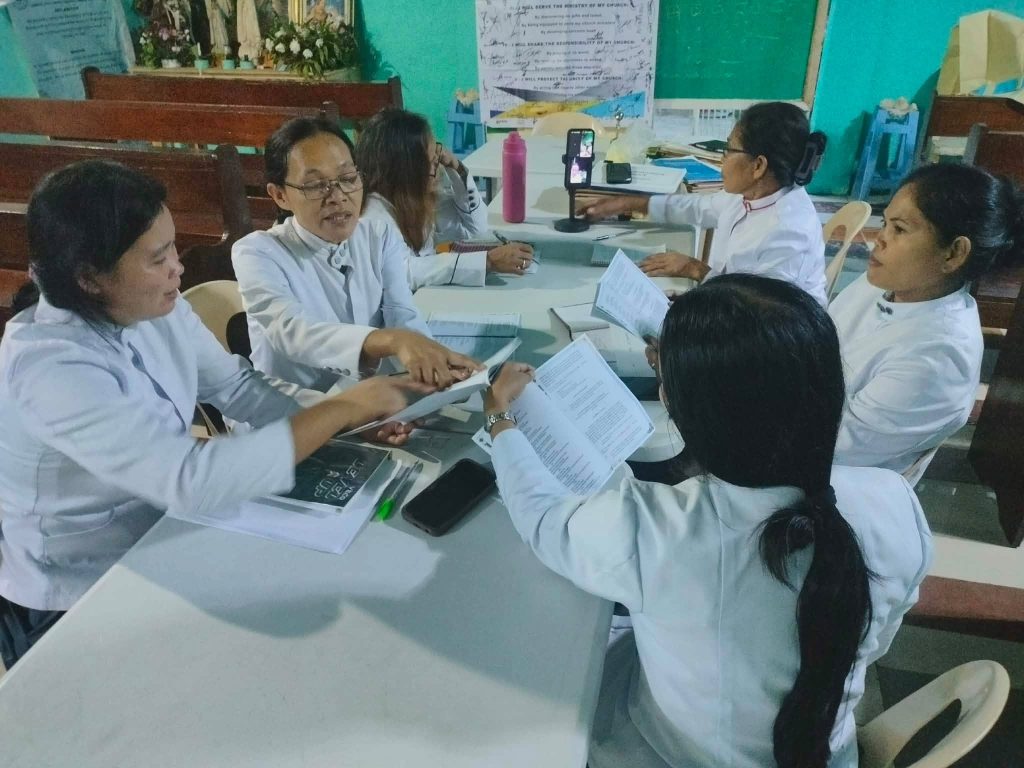
Taking full advantage of the gathering, the Filipino Katoliko Missionary Sisters of Mary (FKMSM) successfully convened a strategic side-meeting during the conference. The focused session maximized the presence of the congregation’s top leadership to address pivotal areas of pastoral work, community organizing, and liturgical renewal.
The sisters’ discussions centered on revitalizing the spiritual life of local communities through three targeted ministry initiatives:
– Organizing the Filipino Katoliko Women: The leadership outlined robust frameworks to empower laywomen within each church, preparing them to take on active, structured roles in parish governance, community outreach, and pastoral care.
– Innovative Youth and Women Engagement: The sisters brainstormed creative approaches to invite women and the younger generation into the devotional life of the church. The focus is on making community prayers—specifically the Rosary and Novenas—more dynamic, accessible, and engaging to foster a culture of shared leadership in prayer.
– Standardizing Parish Music: In a bid to enhance liturgical celebrations, the sisters meticulously revisited the traditional and contemporary songs designated for each religious season. Establishing uniformity across all parishes will serve as a foundational tool for organizing and training local parish choirs.
Moving Forward
The mid-year conference concluded on June 17 with the crafting of a comprehensive, actionable strategic roadmap. This unified plan details strict implementation timelines for diocesan-wide women’s formations, youth prayer initiatives, the rollout of the newly standardized liturgical songbook, and the upcoming diocesan consultations and July parish visitations.
With the 2026 Mid-Year Conference now officially concluded, the bishops, clergy, and sisters are returning to their respective assignments equipped with clear, modern directives to inspire spiritual growth and community empowerment at the grassroots level.